


Data is everywhere in modern businesses, and its reliability impacts everything from decision-making to daily operations. Yet, many organizations struggle with the hidden costs of unreliable data. Studies show companies can lose millions each year when their data isn’t clean or accurate. Often, this happens because technical and business teams misunderstand each other, leading to slow solutions and repeated edits when creating checks for data quality.
Let’s dive into how recent innovations from Collibra empower everyone (not just IT) to create effective custom data quality checks, and how this can make your data truly trustworthy.
Text2SQL: turning ideas into automated checks
Collibra’s Data Quality platform now makes creating custom rules easy and approachable for all users, thanks to its Text2SQL feature. Imagine being able to describe what you want in plain language and the system handles translating that into code behind the scenes. This way, people with deep business understanding but less technical skill can help shape the way their data is checked.
This new capability changes the game by allowing faster, clearer communication and cutting the time spent building or fixing rules.
Why standard data checks aren’t enough
Built-in checks help catch obvious issues (like blank cells or duplicate values), but every company has unique needs. Whether you’re verifying compliant transactions, accurate product listings, or matching patient records, you need tests that are specific to your business. Traditional processes for building these custom checks are slow and often require technical staff to interpret requirements, risking mistakes or misunderstandings.
Collibra’s approach, using AI to help write rules from plain language, is designed to eliminate those barriers and help any user get exactly the checks they need.
How Collibra streamlines the process
Here’s how you can create a custom data quality check with Collibra:
- Describe your rule with a clear name and pick the right data column.
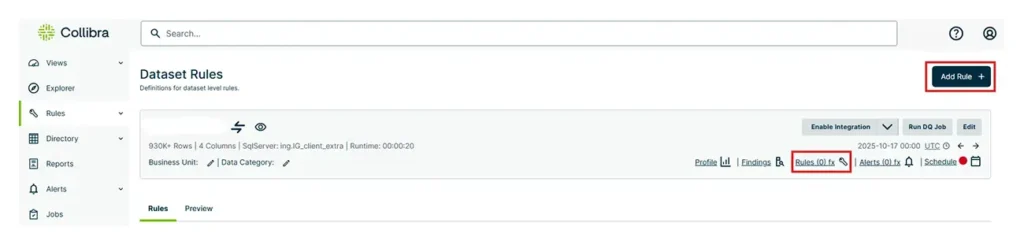
- Focus your filter by selecting the portion of your data to check, making sure your rule applies only where necessary.
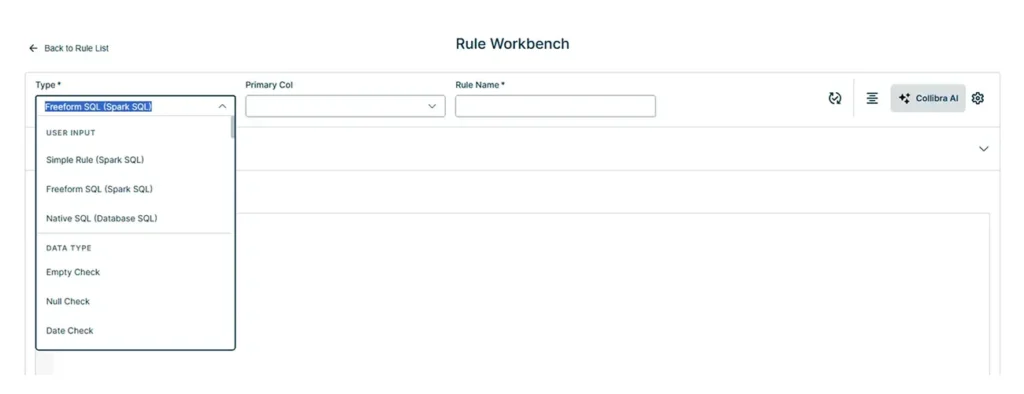
- Use the intuitive editor, which provides helpful features like colored text and automatic formatting, letting you review your logic before activating it.
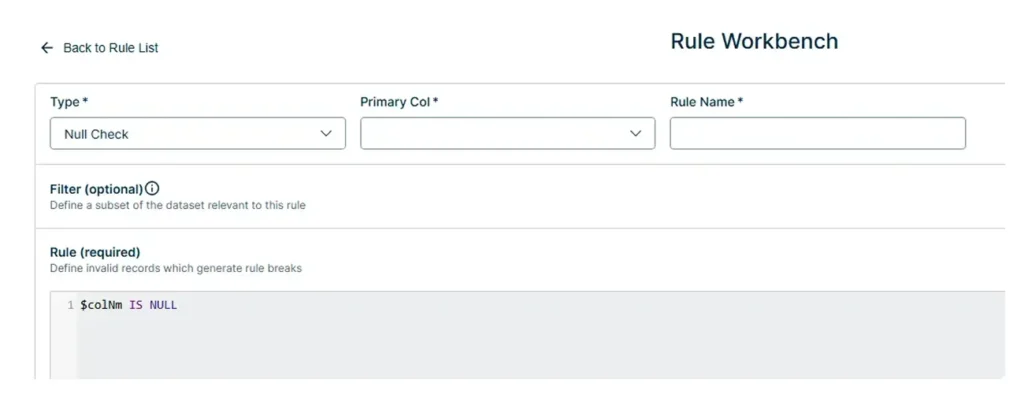
- Assign your governance categories, define what’s considered a problem, and set up alerts for when things go wrong or right.
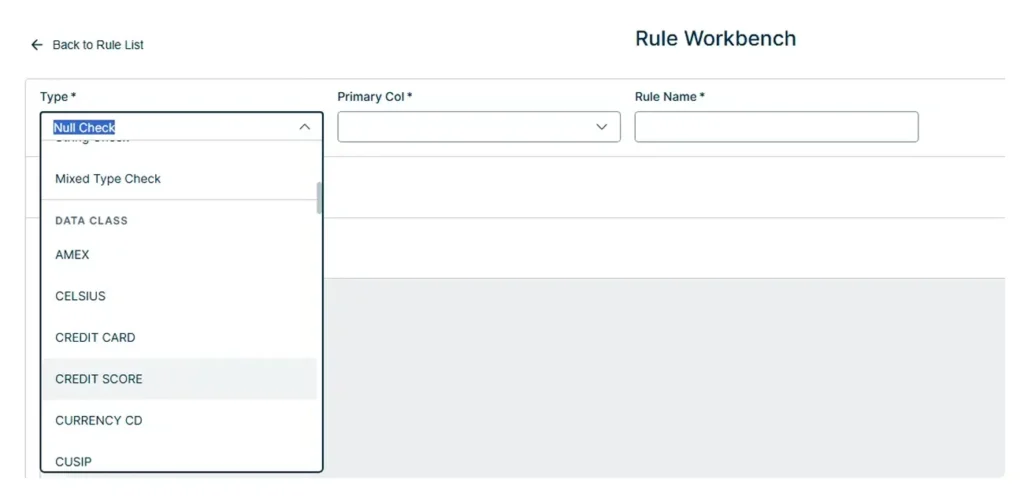
- Get help from AI, using the Text2SQL tool to turn your business descriptions into working checks, with no SQL expertise needed.
You can preview how the rule will behave using test data, so you can spot issues before they affect business operations.
After setup, your custom rule plugs into Collibra’s monitoring system, so you can keep tabs on your data without extra hassle.
Benefits for different roles
For data quality officers:
- Build and modify checks quickly with no waiting for developers.
- Maintain control over which alerts and reporting categories are used.
- Give business staff tools to manage rules and free up IT resources.
For supervisors and managers:
- Get clear warnings for data issues and act fast.
- Explain rule design to anyone in the business using simple terms.
- Add and adjust checks directly from reporting tools without jumping between software.
Where custom checks shine
Here are a few examples of how you can use custom data quality checks to inspire you:
- Use custom logic for finance to enforce policies for each transaction, saving audit time and ensuring compliance.
- Validate healthcare information by cross-checking patient details efficiently, maintaining accuracy for better care.
- Improve your retail operations by checking product information, catching errors in pricing or availability, and focusing on what matters most.
Key advantages of Collibra’s approach
Collibra empowers users to define and manage their own data checks, speeding up adaptation to business changes and reducing technical overhead:
- AI-driven rule creation means experts in the business, not just coders, can set up checks.
- Quick adjustment lets new rules be designed and implemented on the fly.
- Automated monitoring allows the system to regularly evaluate data, freeing up valuable time and improving compliance.
With these tools, any user—whether technical or non-technical—can take charge of the quality of their organization’s data.
The takeaway: bring data governance to everyone
The old method of sending requirements back and forth between business and IT is giving way to smarter, friendlier solutions. By letting users describe what matters most to them, and having Collibra’s AI handle the heavy lifting, organizations can respond faster, reduce miscommunication, and safeguard the value of their data.
About the Author

Share this article
Related Articles
See all-

7 January 2026
| Collibra experts for hireData governance framework. Best practices & examples
-

6 January 2026
| Collibra experts for hireBuilding a data governance strategy
-

6 January 2026
| Collibra experts for hireData observability vs data quality: key differences